

Zambia’s economic growth forecast for 2025 has been revised downward to 4.5% as the International Monetary Fund (IMF) concluded a staff mission to the country.
The Fund noted continued progress in restoring macroeconomic stability following the completion of the IMF-supported reform program.
A staff team led by Edward Gemayel visited Zambia from February 26 to March 4, 2026, as part of the Fund’s regular engagement with the Zambian authorities and other stakeholders to review recent macroeconomic developments, the economic outlook, and policy priorities for the period ahead.
The mission said Zambia has made progress in stabilizing its economy following the implementation of reforms under the recently completed program supported by the Fund, with public external debt largely restructured, international reserves strengthened, economic growth picking up, and inflation declining to within the target band set by the Bank of Zambia.
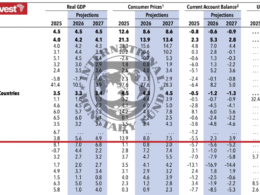
Despite these improvements, the economic outlook faces increased risks and the growth forecast for 2025 has been revised downward to 4.5%, reflecting weaker-than-expected performance in the mining sector, softer wholesale trade activity, and continued energy-related constraints affecting non-mining industries.
Growth is projected to reach 5.5% in 2026 as agricultural output returns to normal levels following a strong harvest in the previous year, although rising global oil prices and heightened geopolitical tensions could place renewed pressure on inflation and the exchange rate.
In this context, the mission noted that domestic fuel prices may need to adjust in line with higher international oil prices in order to prevent losses in fuel tax revenues while preserving fiscal stability.
The discussions also focused on emerging fiscal pressures, as early signs of slippage have begun to appear despite the 2026 budget framework targeting a strong primary surplus, mainly due to spending pressures related to the public sector wage bill, government support to agriculture, and election-related expenditures.
The mission further noted that the scale and financing of operations by the Food Reserve Agency will require careful management to avoid the re-emergence of quasi-fiscal risks that could undermine fiscal consolidation efforts.
Without corrective measures, the primary surplus in 2026 is projected to decline by about 1 percentage point of gross domestic product (GDP) compared with the 3.8% of GDP targeted during the final review of the recently completed Extended Credit Facility program.
“The team held constructive discussions with the Zambian authorities on recent macroeconomic developments, the evolving outlook, and policy priorities for the period ahead,” said Gemayel.
“Zambia has made substantial progress in restoring macroeconomic stability under the recently completed program, with public external debt largely restructured, international reserves strengthened, growth picking up, and inflation continuing to decline—recently reaching the Bank of Zambia’s target band.”
Gemayel added that fiscal structural reforms should remain focused on strengthening revenue and customs administration to broaden the tax base and support a more progressive, equitable, and less complex tax system.
The Zambian authorities also expressed interest in negotiating a successor arrangement with the Fund, with initial technical discussions potentially beginning as early as late April, although more substantive engagement is expected after the country’s general elections later in 2026 once a new government is in place and policy priorities become clearer.
During the visit, the mission met with Hakainde Hichilema, Finance Minister Situmbeko Musokotwane, Bank of Zambia Governor Denny Kalyalya, as well as senior government officials, representatives of civil society organizations, and development partners.
Zambia’s Economic Reform Program
Zambia has been implementing an economic reform program supported by the IMF under the Extended Credit Facility aimed at restoring debt sustainability, stabilizing public finances, and supporting economic recovery after the country’s sovereign debt default in 2020.
The program has focused on restructuring external debt, strengthening fiscal management, rebuilding international reserves, and implementing reforms intended to improve the business environment and support private sector-led growth.