
Lusaka Second Best City For Investment In Africa, Says PwC

pwc-lusaka-zambia

According to the report titled “ Into Africa – The continent’s Cities of Opportunity” published by PwC on March 17, 2015 Lusaka is second only after Dar Es Salaam among the top five cities in Africa that are conspicuous sites for investment at the moment.

The five cities are, in descending order: Dar es Salaam, Lusaka, Nairobi, Lagos, and Accra.

Overall Lusaka is the 14th most dynamic and focused on the future city, among a pool of 20 top African cities.

Paul Cleal, partner and PwCs Africa Business Group Leader commented: “We have sought to answer ‘what makes an African city one of opportunity’ by developing a set of questions that investors should ask themselves and themes on which city politicians and officials can work on to improve their competitiveness. This report assesses how the cities are performing not only on a regional level but also on an international one which is hugely important in terms of these cities being able to compete and prosper on both of these stages.”

PwC studied four indicators: Economy, infrastructure, human capital and society & demographics (which in total contains 29 variables). 
Related Posts
IMF World Economic Outlook 2026 Zambia
Read More

Zambia GDP to Grow 5.6% in 2026 and 4.9% in 2027 With Inflation Easing to 8.0%, IMF Projects

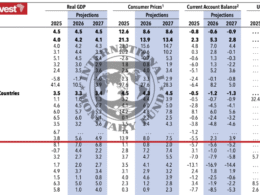
In its World Economic Outlook October 2026, the IMF projects Zambia's real GDP growth to accelerate to 5.6% in 2026 from 3.8% in 2025, above the 4.5% sub-Saharan Africa average and second only to Tanzania's 6.0% among Zambia's neighbours. Zambia's inflation is projected to ease to 8.0% in 2026 from 13.9% in 2025, below the 8.6% sub-Saharan Africa average, while the current account swings to a surplus of 2.3% of GDP.
AfDB AFRICAN ECONOMIC OUTLOOK 2026
Read More

Zambia GDP Growth Revised to 3.8% in 2025, AfDB Projects Recovery to 5.0% in 2026 and 6.3% in 2027 as Inflation Eases to 9.3%

The AfDB African Economic Outlook 2026 revised Zambia's GDP growth to 3.8% in 2025, down from an initial 5.2% estimate, due to underperformance in ICT, trade, and finance, with inflation declining to 14.0% and public debt dropping to 87.6% of GDP following debt restructuring. Growth is projected to recover to 5.0% in 2026 and 6.3% in 2027, driven by mining, agriculture, and energy recovery, with inflation easing to 9.3% in 2026 and the current account swinging to a surplus of 0.8% of GDP on higher copper export earnings.