
Export
ZAMBIA EXPORTS KEY FIGURES
| Q4 2024 Export Earnings | Copper Export Growth | Non-Traditional Exports | AfCFTA Market Access |
|---|---|---|---|
| USD 3.1 billion | +43.4% | USD 920.5 million | 54 countries |
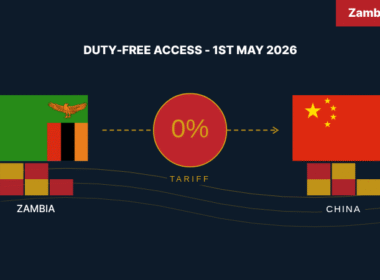
Zambia’s total export earnings reached USD 3.1 billion in the fourth quarter of 2024, up 28.2% year on year, driven by a 43.4% rise in copper earnings to USD 2.1 billion, as the government pursues export diversification through the African Continental Free Trade Area’s market of 54 countries.
Beyond copper, exports of ores, slag and ash to Canada grew 85.6%, precious stones to South Africa grew 201.6%, and non-traditional exports totalled USD 920.5 million, even as a Rapid Assessment Report identifies 412 potential new export products across 25 sectors.
Export Performance
Zambia’s total export earnings reached USD 3.1 billion in the fourth quarter of 2024, up 28.2% from the same period in 2023, driven by a 43.4% rise in copper earnings to USD 2.1 billion on higher prices and volumes[1]. Beyond copper, ores, slag and ash exports to Canada grew 85.6% to USD 54.6 million, precious stones to South Africa grew 201.6% to USD 34.0 million, and articles of stone, plaster and cement to the United Arab Emirates reached USD 80.7 million from effectively nothing a year earlier[1]. Non-traditional exports were roughly flat at USD 920.5 million[1].
Market Access and Diversification
The Ministry of Commerce, Trade and Industry frames the African Continental Free Trade Area as an opportunity to increase export earnings by tapping into an African market of 54 countries with a combined population of more than 1.3 billion people and purchasing power of about USD 3.4 trillion[2]. A Rapid Assessment Report on Value Addition and Diversification, launched with UNCTAD, identified 412 potential diversification products across 25 sectors, with 73 of those products directly linked to critical energy transition mineral value chains[3].
Investment Opportunities
The widening gap between Zambia’s fast-growing copper and gold export earnings and its still-rising import bill points to opportunities in import substitution and export diversification alike, particularly in the 412 products identified in the Rapid Assessment Report and the manufacturing and agro-processing capacity the government is separately promoting, detailed further on the dedicated Trade page[1][3].
Last Update: September 2026