
Aquaculture
ZAMBIA AQUACULTURE KEY FIGURES
| Aquaculture Production Growth (2019-2021) | 2021 Aquaculture Output | EU Zambia Aquaculture Project Funding | Project Period |
|---|---|---|---|
| +57.1% | 59,679 MT | EUR 5.4 million | 2022-2026 |
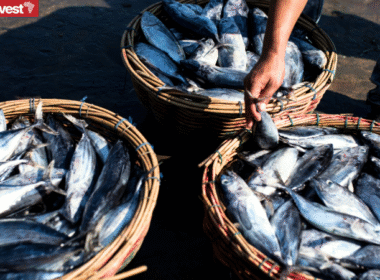
Zambia’s aquaculture production grew 57.1% from 38,000 metric tonnes in 2019 to 59,679 metric tonnes in 2021, outpacing capture fisheries growth, as the European Union-funded Zambia Aquaculture Project channels EUR 5.4 million into research, training and infrastructure through July 2026.
The Ministry of Fisheries and Livestock’s aquaculture intensification drive established 13 hatcheries producing 213 million fingerlings and trained 3,093 farmers in fish-cage installation and management, while the EU project has since launched Zambia’s National Fisheries and Aquaculture Policy and trained dozens of extension officers and disease-surveillance staff.
Aquaculture Production Growth
Zambia’s total fisheries production rose 22.5% from 129,822 metric tonnes in 2019 to 159,043 metric tonnes in 2021, driven mainly by aquaculture, which posted a 57.1% increase in fish production to 59,679 metric tonnes from 38,000 metric tonnes over the same period, while capture fisheries grew only 0.7% to 95,625 metric tonnes in 2021[1]. The bulk of aquaculture production came from commercial large-scale fish farmers in Southern, Northern, North-Western, Copperbelt and Lusaka Provinces, identified as the country’s high-potential aquaculture zones[1]. To support this growth, the Ministry of Fisheries and Livestock retrained 115 extension officers in pond and cage construction and trained 3,093 farmers in fish-cage installation, aquaculture systems management, and feed formulation, while establishing 13 hatcheries that produced 213 million fingerlings and procuring 450 cages and pens for cooperatives in Sinazongwe, Gwembe and Chitambo districts[1]. Fish exports grew 23.4% to 6,696 metric tonnes in 2021 from 5,427 metric tonnes in 2019, with the Democratic Republic of the Congo, Malawi, Hong Kong, South Africa and the United States as the main destinations, even as import volumes grew faster, up 15.29% to 92,168 metric tonnes, sourced mainly from Namibia, China and South Africa[1].
The EU-Funded Zambia Aquaculture Project
The Zambia Aquaculture Project, a European Union grant signed on July 29, 2022, runs from August 1, 2022 to July 31, 2026, with a closure period extending to April 2027, and is funded at EUR 5.4 million, comprising EUR 4 million in project expenditure, EUR 1 million in technical assistance and EUR 400,000 in Government of Zambia counterpart funding[2]. Its overall objective is to support government policy to reduce rural poverty and malnutrition and improve rural livelihoods, with a specific purpose of increasing the productivity, income and employment opportunities of emergent, small and medium-scale fish farmers[2]. The project’s first result area alone, strengthening national research and development capacity in aquaculture, is funded at ZMW 19.2 million and covers disease surveillance, fish nutrition research, genetic improvement of the native green-headed bream, and rehabilitation of research stations including the Kasaka Fisheries Training Institute[2]. Achievements to date include the launch of Zambia’s National Fisheries and Aquaculture Policy and its implementation plan on June 6, 2023, a geospatial map of potential aquaculture areas, and the training of 85 staff in fish disease surveillance and 27 extension officers in extension service delivery[2].
Investment Opportunities
Aquaculture’s 57.1% production growth against capture fisheries’ flat 0.7% marks fish farming, not wild catch, as the segment absorbing Zambia’s rising fish demand, and the EU project’s own geospatial mapping of potential aquaculture areas gives investors a specific, government-produced tool for identifying where in Southern, Northern, North-Western, Copperbelt and Lusaka Provinces new commercial aquaculture capacity is best placed[1][2]. Fish import volumes of 92,168 metric tonnes against exports of just 6,696 metric tonnes in 2021 point to substantial domestic demand still being met from abroad, a gap that new hatchery, feed and commercial-scale grow-out investment is positioned to close[1].
Last Update: September 2026